
How much do Foster Parents get paid?
Foster parents are given allowances to help with looking after and supporting the children or young people in their care.

How much do Foster Parents get paid?
Foster parents are given allowances to help with looking after and supporting the children or young people in their care.

Foster Care is a career
Foster care is a viable career that many people choose to grow and develop in. It is a truly rewarding experience that allows you to help change a young person's life and make a difference. Whilst the personal reward of giving back to society is the reason why many people choose to foster, people also often ask how much foster carers get paid.
It is an important factor in your decision to become a carer and may not be viable for everyone. Make sure you consider your finances before you decide to apply. Like any career, you are paid a reward allowance for your time and effort. Carers are also subject to certain tax benefits, this means that many carers pay little or no tax.
The support package offered by Fusion Fostering includes several benefits:
- Generous financial allowances for the child and carer - a foster parents status is self-employed, which attracts tax breaks
- 24-hour support
- The opportunity to gain qualifications
- Regular training
- 14 days paid annual leave (accrued whilst children are placed)
As well as your income, foster carers benefit from specific tax exemptions and rules. The Tax Scheme is called Qualifying Care Relief
Fostering Allowances
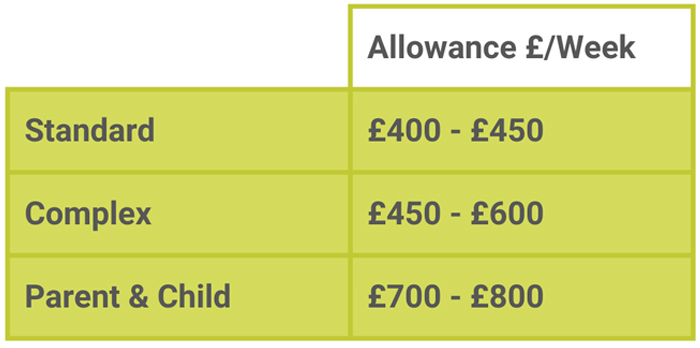
A fostering allowance is paid to you for each foster placement you have. This fee is broken down into two parts; the carer professional fee and the child's allowance which is expected to cover the needs of caring for that person day-to-day.
Looking after a child involves more than just a roof over their head and food on their plate. Fusion Fostering pays an allowance to cover a variety of costs associated with looking after the young person such as pocket money, activities, mileage, clothing and holidays. Included is also a reward allowance for the carer, this covers the time and skill you have dedicated to complete your role fully.
The allowance below includes the carers reward allowance:
Age: 0-18
Allowance £/Week: £400
Solo Placement: £500
Parent & Child: £600 - £800
Higher allowances can sometimes be paid to care for children and young people who have additional needs that require further support, examples include:
- children with disabilities
- young people with autism
- parent and child placements
- children who require higher levels of supervision due to more demanding needs.
The foster parent will require specialist skills to help care for the child and may even have certain experiences or qualifications that make them more suited to care for particular children. This specialist skill will be considered in the allowance paid if agreed and appropriate.
Tax benefits
As well as your income, foster carers benefit from specific tax exemptions and rules. The Tax Scheme is called Qualifying Care Relief. For many foster carers, their specific circumstances will mean they pay little to no tax. This is dependent on your individual situation and placements.
As a foster carer, you are treated as self-employed by the Government, the general outline of the tax exemption you can expect is displayed below:*
- (a) Fixed amount of £10,000 (if approved for a whole tax year)
- (b) Additional amount per child - which depends on child's age and the number of weeks in placement. (i) if child is 0-10 years £200 per week (ii) if child is 11-18 years £250 per week